

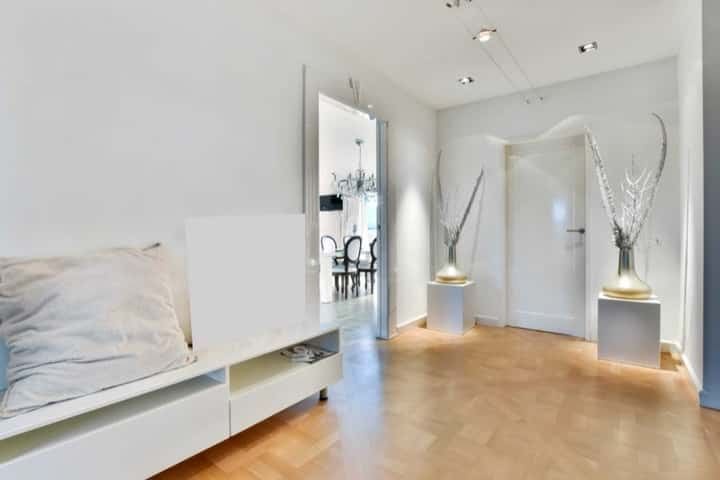
Designing your entrance hall: tips for a warm welcome
- 1Why does the entrance hall matter so much?
- 2Make the most of the space you have
- 3Get organised and never hunt for your keys again (well, almost)
- 4Play the style card for a welcoming entrance hall
- 5Plan any building work for a bespoke entrance hall
- 6Take inspiration from current trends
- 7Think about upkeep
- 8Connect the entrance hall to the rest of the house
- 9Conclusion: a successful entrance hall means a welcoming home
- 10Frequently asked questions
The entrance hall is the first impression anyone gets of a home: it is your house's calling card.
All too often overlooked, it really does deserve special attention. Whether your entrance hall is large or small, a little ingenuity is all it takes to turn it into a practical, attractive and welcoming space.
Why does the entrance hall matter so much?

The entrance hall plays several roles. It welcomes your visitors, helps you organise daily life and often acts as a transition between indoors and outdoors. A poorly planned space quickly becomes a clutter nightmare, whereas a well-designed entrance hall makes life easier.
Make the most of the space you have
Even in a small entrance hall, a few clever tricks can work wonders.
Choose multifunctional furniture
In narrow entrance halls, go for furniture that combines several functions: a bench with built-in storage to hide shoes away, or a console table with drawers for keys and paperwork.
Put the walls to work
Entrance hall walls are often under-used. Fit floating shelves, coat hooks or even rails with hooks for hanging bags, coats or umbrellas. For a designer touch, choose pieces that match the style of your interior.
Tip: use the height
If your entrance hall is small but has good ceiling height, think about wall-mounted storage or high shelving. This frees up floor space while giving you extra storage.
Get organised and never hunt for your keys again (well, almost)

Organisation is the key (pun intended!) to a functional entrance hall.
Create dedicated zones
Divide your entrance hall into zones according to your needs: one for shoes, another for coats, and a final one for everyday items such as keys, post or your phone.
Invest in practical accessories
- A catch-all tray:essential for dropping off small items the moment you walk in.
- A wall-mounted key holder:no more morning panic looking for your keys.
- Boxes or baskets:ideal for keeping small accessories such as gloves or glasses together.
Zone by zone, here is the storage that goes with each one and what you drop there on your way in.
| Entryway zone | Storage to install | What goes there |
|---|---|---|
| Shoes | Bench with built-in storage | Shoes out of sight as soon as you arrive |
| Coats and bags | Hooks or a hook rail | Coats, bags, umbrellas |
| Keys and paperwork | Console with drawers, wall key holder | Keys, mail, paperwork |
| Everyday odds and ends | Catch-all tray, boxes or baskets | Gloves, glasses, phone |
| Ceiling height | High shelves or wall-mounted units | Extra storage, floor kept clear |
| Floor | Doormat outside, absorbent rug inside | Dirt and damp stopped at the door |
Play the style card for a welcoming entrance hall
The entrance hall is a thoroughfare, but that does not mean it has to lack style. Add a decorative touch to make it inviting.
Choose the right colours
Light shades make a cramped space look bigger, which is the safe bet in a narrow hallway. A large entrance hall can take the opposite route, with brighter colours or a bold wallpaper that give it real character.
Light your entrance hall well
Good lighting is essential. Combine:
Good lighting works in two layers. General lighting first, a ceiling light or a pendant, so the space is clear the moment the door opens. Then extra sources on top, wall lights or a lamp on the console table, for a cosier atmosphere in the evening.
Add decorative touches
- Amirroris a must. Not only does it make the space look bigger, it is also handy for a final check before you head out.
- Plantsor flowers bring a touch of nature and freshness.
- Adoormat or runnerhelps define the space and keeps your floor clean.
Plan any building work for a bespoke entrance hall

Sometimes a small renovation makes all the difference. Here are a few ideas worth considering to optimise your entrance hall:
Fit a partition or glazed screen
If your entrance hall opens straight onto a living space, consider a lightweight partition or a glazed screen to mark out the space while still letting the light through.
Rethink the flooring
Hard-wearing, easy-to-clean flooring is essential in an entrance hall. Tiles, polished concrete or vinyl are practical and attractive choices.
Renovation tip: play with levels
If the layout of your home allows, create a raised or recessed area for shoes and coats. It also gives your entrance hall real character.
Take inspiration from current trends
Interior design trends can guide you as you plan your entrance hall.
- Scandinavian minimalism:clean lines, light shades and natural materials.
- Industrial style:metal coat hooks, raw timber shelving and black steel accessories.
- Boho feel:woven baskets, ethnic-patterned rugs and rattan mirrors.
Blend these styles with your own personality for an entrance hall that feels like you!
Think about upkeep

A functional entrance hall is good. An entrance hall that is easy to look after is even better! Favour robust materials that are simple to clean. An outdoor doormat paired with an absorbent mat inside will protect your floor effectively from dirt and damp.
Connect the entrance hall to the rest of the house
For visual harmony, make sure the entrance hall is consistent with the style of the rest of your interior. If your living room is modern, go for a contemporary entrance hall. If you love vintage charm, play with antique furniture and retro accessories.
Conclusion: a successful entrance hall means a welcoming home
Designing your entrance hall does not necessarily call for a big budget, just a little ingenuity and planning. With these tips and ideas, you can turn this often-neglected space into somewhere practical, attractive and welcoming.
If you would like more ideas, have a read of our article on how to convert your loft!
Frequently asked questions
How do you fit out a narrow entryway? Go for furniture that does two jobs at once: a bench with storage to hide shoes, or a console with drawers for keys and paperwork. Then use the walls, which are usually wasted, with floating shelves, hooks or a rail. If the ceiling is high enough, take the storage upwards and keep the floor clear.
What colour makes a small entrance look bigger? Light shades visually open up tight spaces, so that is the safe reflex in a narrow entrance. In a large hallway the opposite works: a brighter colour or a bold wallpaper gives it character. Either way, stay consistent with the style of the rest of the home.
Where should you keep your keys in the entrance? A wall-mounted key rack settles it, as long as you fit it where your hand naturally goes when you walk in. Add a catch-all tray for everyday small items and boxes or baskets for gloves and glasses. The principle is simple: one zone per use, shoes, coats, everything else.
How do you light an entrance properly? In two layers. General light first, a ceiling fixture or a pendant, so you can see as soon as the door opens. Then accent light, wall lamps or a lamp on the console, which warms the room up in the evening.
What flooring works best in an entrance? Something hard-wearing and easy to clean, so tiles, polished concrete or vinyl. Pair it with a doormat outside and an absorbent rug inside, which stop most of the dirt and moisture. The rug has a second benefit: it marks out the space visually.
How do you separate the entrance from the living room? A light partition or a glazed screen marks the space without blocking the light. If the layout allows it, a raised or sunken level marks the transition and gives you somewhere for shoes and coats. Both options mean minor building work, so decide before you buy the furniture.
On the same topic