
Welcome book for a rural gîte: what should you include?
A template to adapt that explains access to the gîte, mobile coverage, sewage, water and local services.
- 1Why does a rural gîte need a different welcome book?
- 2How to get a guest to the gîte without GPS or signal?
- 3What to say about the septic system, water and animals?
- 4Where to put the bins and what to say about shops?
- 5Which template to copy for a rural gîte?
- 6PDF, paper or online welcome book: which to choose?
- 7Frequently asked questions
In a welcome book for a rural gîte, start with the route to follow when GPS or mobile coverage is no longer reliable. Then explain the house-specific rules: sewage, water source, heating, bins and access to shops. Send the directions before the guest sets off, in a format they can keep offline. The template below is for copying, but no instruction about water or septic systems should be published without verification at your gîte.
Why does a rural gîte need a different welcome book?
The general welcome book template already follows the stay from check-in to departure. Keep that structure. In a rural gîte, give more space to what a guest cannot guess from looking at the house: the final junction, the phone signal that doesn’t work, a tap fed from a different source or the bin to leave at the hamlet.
Do not fill these pages with generalities about the countryside. The guest wants to know where to turn, what to drink and where to put their bag. The view can wait until they have found the door.
How to get a guest to the gîte without GPS or signal?
Write the directions from an easy-to-recognise landmark, then indicate the final junction, the driveable entrance and where to park. A pin on a map helps, but does not replace the phrase “take the track on the right after the washhouse”. Test the route by following your own directions, without relying on your local knowledge.
Specify where the phone actually gets a signal after testing it onsite. The Mon réseau mobile tool from Arcep lets you compare operators; the map does not say whether the guest will receive your message behind the gîte’s walls. In the welcome book, distinguish mobile coverage from wifi and give the exact network name. The wifi and access information must be easy to find once on site.
Send the directions and, if necessary, a screenshot of the final stretch before the guest sets off. A PDF saved on the phone can contain a reliable offline access plan; a link to an online welcome book alone cannot. Reserve sending the key box code for the concerned guests rather than placing it in a document that circulates.
What to say about the septic system, water and animals?
Describe the installation you actually have, without calling every individual sewage system a “septic tank”. For toilets, give a short instruction and place a bin nearby: toilet paper in the bowl, wipes and pads in the bin. The French Office for Biodiversity also advises against flushing so‑called biodegradable wipes. For cleaning products, follow the guidance of your own installation’s manual; a general prohibition made up from thin air is less useful than the products you actually provide.
Indicate which taps supply water meant for drinking and which, if any, are fed by another source. Never present well water as potable on the basis of the welcome book alone. Service Public specifies that collected rainwater is not intended for drinking; a written instruction does not replace marking water points onsite. If animals live near the gîte, say where their area begins, whether gates must remain closed and who to contact if an animal is found outside its enclosure.
Do not invite guests to enter a field “to have a look” without the farmer’s permission.

Where to put the bins and what to say about shops?
Write the route to the containers, not just their colour. If the bin is at the end of a track or glass is deposited in another village, name the place and give a visible landmark. Collection instructions come from the competent local authority: the ministry responsible for the ecological transition reminds that households must follow their local waste management service. Check your commune’s calendar and instructions before copying them.
Do the same work for shopping. Give the address of the shop you use, its verified closing day and a solution for late arrivals. If nothing is open near the gîte in the evening, state this in the arrival message. Your local recommendations in the welcome book can then help during the stay; they do not replace the warning sent before the journey.
The bin “somewhere after the bend” rarely ends up in the right place.
Guests do read these sections. Over 90 days of StyQR welcome book use, “Bins” is the most clicked practical information section (12,432 clicks), and “Food shops” comes third among nearby places, after restaurants and culture.
Which template to copy for a rural gîte?
Copy the useful sentences, replace each field in brackets and remove what does not apply to your property. Water, sewage and sorting instructions require on-site verification. The table shows the expected result: each heading must prevent a search or an unnecessary call.
| Rubrique | À renseigner chez vous | La question à laquelle elle doit répondre |
|---|---|---|
| Dernier trajet | Repère, embranchement, portail, stationnement | « Je suis au hameau, je tourne où ? » |
| Réseau | Zone où le mobile capte, nom et mot de passe du wifi | « Pourquoi mon téléphone ne passe-t-il pas ? » |
| Eau et assainissement | Origine de l’eau, points d’eau à distinguer, consignes de l’installation | « Peut-on boire cette eau et jeter cette lingette ? » |
| Déchets | Bacs, emplacement réel, calendrier local, verre | « Où va ce sac avant notre départ ? » |
| Vie autour du gîte | Commerces vérifiés, animaux, personne à joindre | « Que fait-on ce soir et à qui demande-t-on ? » |
Here is wording to complete, rather than an example that might lead you to copy the wrong instruction:
Bienvenue au [nom du gîte]. Depuis [repère visible], prenez [direction] jusqu’à [second repère]. L’entrée des voitures se trouve [description]. Garez-vous [emplacement autorisé]. En cas de doute sur le chemin, appelez [contact] avant [dernier point où le téléphone capte].
Dans la maison, le réseau mobile [description vérifiée sur place]. Le wifi s’appelle [nom exact] ; son mot de passe est [mot de passe]. Si la connexion tombe, contactez [personne à joindre] par [moyen possible sur place].
Les eaux usées vont vers [installation vérifiée]. Dans les toilettes, jetez uniquement le papier toilette ; mettez les lingettes et protections dans la poubelle prévue. Utilisez les produits d’entretien [emplacement et consigne tirée de la notice de votre installation]. L’eau du robinet [préciser les points concernés et leur usage après vérification]. Le point d’eau [emplacement] porte une indication sur place : [indication exacte].
Pour les déchets, les sacs vont dans [bac et emplacement précis]. Le verre se dépose à [lieu et repère]. Consultez [calendrier local indiqué dans le livret] pour la prochaine collecte. Le commerce où nous faisons nos courses est [adresse vérifiée] ; pour une arrivée tardive, prévoyez [solution réellement disponible]. Le portail près de [lieu] doit rester fermé à cause des animaux de [personne concernée].
Au départ, laissez les clés [lieu], fermez [ouvertures concernées] et faites [consignes convenues]. Vous n’avez pas à [tâche prise en charge par l’hôte]. Si l’eau, le chauffage ou l’accès pose problème, contactez [nom et moyen de contact].
The final sentence prevents turning departure into improvisation. Separate what you ask of the guest from what your team handles; the cleaning checklist for the team and the guest helps make that distinction.
PDF, paper or online welcome book: which to choose?
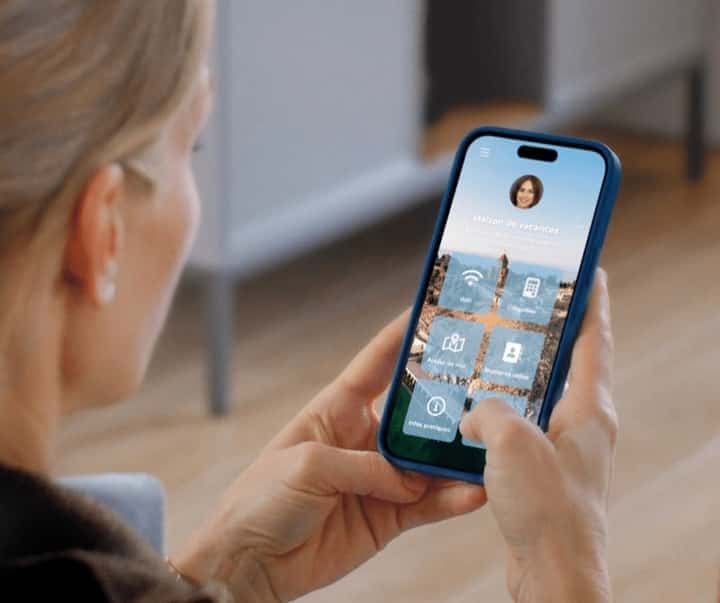
Keep two uses distinct. The directions and a contact must be retrievable offline before arrival. On site, an online welcome book is useful for information that may change: collection, a closed shop, a corrected instruction. It does not fix a mobile dead zone or an incorrect access instruction.
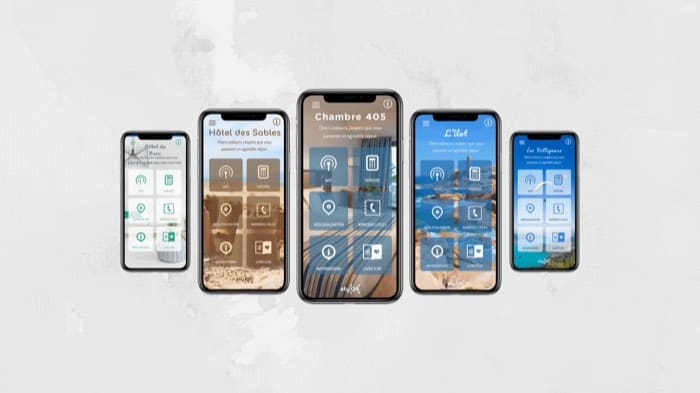
For a gîte rented rarely, with stable information, a free PDF sent in advance may be enough. A StyQR welcome book lets you update shared content without sending a new file to each guest; our comparison of the digital welcome book and the PDF Canva explains this choice. StyQR internal observation: 91 % of openings of our welcome books are on mobile. This figure describes how our welcome books are used, not the mobile coverage of your hamlet.
If you choose a digital welcome book for your gîte, share its link before the stay and place its QR code inside. The sharing and paper options let you plan for a physical copy on site. But always send the final turns in a savable format: a QR code displayed in the kitchen does not help anyone find the kitchen.
Method: figures calculated by StyQR on 16 November 2026 from guests’ use of its welcome books, from 18 August to 15 November 2026 (237,928 visits, across 4,875 welcome books). Shares refer to visits and times are Paris time. No figure relates to any individual property.
Frequently asked questions
Should the key box code be put in the welcome book? Give the guest the code they need before arrival. If the welcome book can be forwarded or remain accessible after the stay, prefer a message addressed to the specific guest for a sensitive code. Also check that the box location is understandable without the code.
What to say if the phone has no signal at the gîte? Distinguish mobile calls, mobile data and wifi: they do not necessarily work in the same places. Test access onsite, then write where guests can reach you and what to do if the internet fails. Send the route before entering the poorly covered area.
Can you write “not potable water” only in the welcome book? No: the guest must be able to recognise the water point concerned without searching a page on their phone. Verify the origin and intended use of each supply before drafting the instruction, then identify the water points on site. For a particular installation, have the recommended steps confirmed by the competent service.
What instruction to give for a septic system? Start by verifying which device actually equips the gîte and consult its manual. Provide a bin in the toilets and indicate not to flush wipes or menstrual products. For household products, name those you provide rather than inventing a rule that would apply to all installations.
Is a PDF enough for an isolated gîte? Yes, if it contains precise directions and the guest saves it before losing connection. Its limit appears when information changes: an old version can remain on the phone. For collection and shops, plan a simple way to send corrections to guests already present.
On the same topic