
Outdoor space design in the city: ideas for balconies, terraces and gardens
- 1Why put care into your outdoor space in the city?
- 2Designing a balcony: small space, big ideas
- 3Designing a terrace in the city: more space, more possibilities
- 4Designing a small urban garden: luxury in the city
- 5The key ingredients of a successful outdoor space
- 6Matching your outdoor space to your budget
- 7Conclusion: even in the city, anything is possible
- 8Frequently asked questions
Living in the city is convenient. Everything is within easy reach. Transport. Shops. Restaurants. And yet we often dream of a little corner of our own. Somewhere to breathe. To catch the sun. To read in peace.
Good news: even in the heart of the city, a well-planned outdoor space can turn a few square metres into a genuine haven. Whether you have a balcony, a terrace or a small garden, anything is possible. All it takes is a little organisation. And a touch of creativity.
In this article, we look at how to design your outdoor space according to the room you have. You will find simple ideas. Practical advice. And a few tricks for making the most of every centimetre.
Why put care into your outdoor space in the city?
Before we get the flower pots and cushions out, let us pause for a moment. Why invest time in your outdoor space?
First, because it improves your quality of life. An outdoor space, however small, becomes an extra room. You can work there. Have lunch there. Entertain friends there.
Second, because a well-designed outdoor space adds value to your home. A pleasant balcony or a cosy terrace makes all the difference.
And finally, because nature soothes. A few plants are enough to create a calm atmosphere. And in the city, that is precious.
Designing a balcony: small space, big ideas

The balcony is often the city dweller's first outdoor space. Sometimes narrow. Sometimes long. But rarely very large. And yet, designed well, it can become a little slice of paradise.
Making the most of the space without cluttering it
On a balcony, every centimetre counts. So you need to think smart.
Go for folding furniture. A small drop-down table fixed to the wall. Two lightweight chairs. That is enough for a coffee in the sun.
Think vertically too. Wall shelves. Hanging planters. A trellis for climbing plants. That way, you free up the floor while adding greenery.
Above all, avoid overloading it. An overcrowded balcony looks smaller. And far less inviting.
Choosing the right plants
Your choice of plants depends on the aspect.
If your balcony is south-facing, go for sun-tolerant plants. Lavender. Geraniums. Potted olive trees. They love the heat.
If, on the other hand, it is shaded, ferns are a better bet. Hostas. Or evergreens such as ivy.
For a successful outdoor space, mix heights and volumes. Pots on the floor. Hanging baskets. Planters along the railing. It creates depth. And plenty of charm.
Creating a cosy atmosphere
A balcony is not just a row of pots. It is somewhere to live.
Add an outdoor rug. A few colourful cushions. A string of lights. The atmosphere changes instantly.
In the evening, soft lighting transforms the space. You could almost believe you were on holiday. Without leaving the city.
Designing a terrace in the city: more space, more possibilities

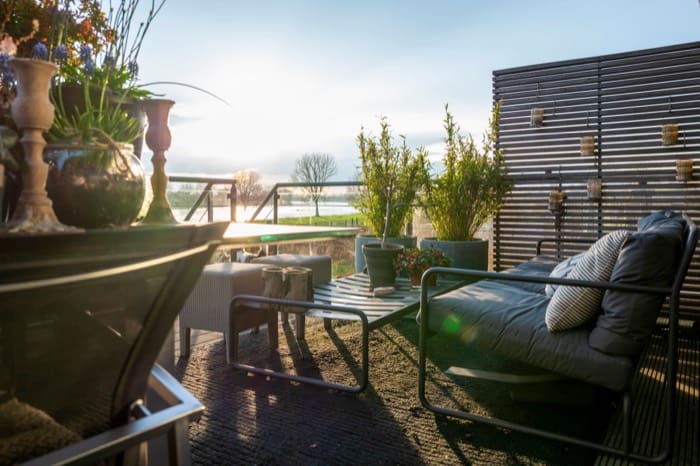
A terrace gives you more freedom. It allows for a fuller layout. You can structure the space. Create different zones.
Defining separate areas
Even on a small terrace, it is important to mark out the different functions.
A dining area. A relaxation area. Possibly a planting area.
A rug can mark out the seating area. A central table can define the dining area. And a few planters in a row can create a natural divide.
The terrace then feels organised. And much larger.
Choosing the right furniture
On a terrace, the choice of furniture is crucial.
Go for weather-resistant materials. Aluminium. Woven resin. Treated timber.
If space allows, add a small outdoor sofa. A coffee table. And why not a hanging chair? Yes, even in the city you are allowed to dream.
Do watch the proportions, though. Furniture that is too bulky can smother the space. You need to strike the right balance.
Using planting for more privacy
In the city, you are often overlooked. Happily, planting can act as a screen.
Potted bamboo. Ornamental grasses. Living green panels. They shield you from view while adding a natural touch.
This is central to any outdoor project. It is not only about decoration. It is also about creating a bubble.
Designing a small urban garden: luxury in the city
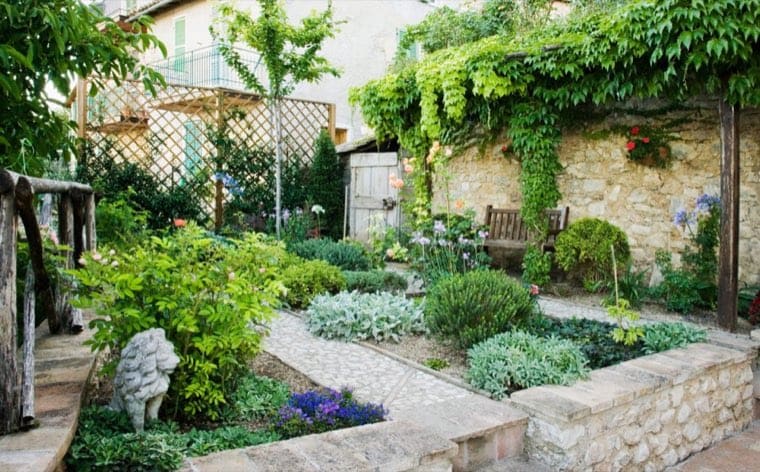
If you are lucky enough to have a small garden in the city, you are sitting on treasure. Even a few dozen square metres can be transformed.
Giving the garden structure
A small garden should not be left to chance.
Create a path. Mark out a terrace area. Lay down lawn or gravel.
Edging gives visual structure. Beds add depth. And stepping stones give the garden character.
That way, even a small garden feels bigger.
Mixing hard landscaping and planting
A good outdoor space is all about balance.
Combine paving slabs or timber for the terrace. Add a variety of plants. Perhaps include a small water feature.
The contrast between materials and greenery creates a harmonious feel.
And let us not forget the vegetable patch. Even in the city, a few cherry tomatoes and some herbs are easy to grow. It is handy. And very satisfying.
Creating a sociable space
An urban garden is perfect for entertaining.
Put in a large table. Add comfortable chairs. Plan for outdoor lighting.
And why not a small barbecue? Summer evenings take on a whole new dimension.
The three setups call for different priorities. Here is what to tackle first in each case.
| Space | What to optimise first | Suitable furniture | Role of the planting |
|---|---|---|---|
| Balcony | Height, to free up the floor: wall shelves, hanging planters, a trellis | Folding furniture: a wall-mounted drop-leaf table and two light chairs | Lavender, geraniums, potted olive trees in full sun; ferns, hostas, ivy in the shade |
| Terrace | Zoning: a dining corner, a lounge corner, a planting corner | A small outdoor sofa, a coffee table, weatherproof materials (aluminium, woven resin, treated wood) | A screen against overlooking windows: potted bamboo, ornamental grasses, green panels |
| Small city garden | Structure: a path, edging, beds, stepping stones | A large table, comfortable chairs, outdoor lighting, possibly a small barbecue | A balance of hard surfaces and greenery, varied planting, herbs and cherry tomatoes |
The key ingredients of a successful outdoor space
Whatever the space, some principles are universal.
Think about lighting
Lighting transforms an outdoor space.
Recessed spotlights. Solar lanterns. String lights. Each option creates a different mood.
Use several sources. And vary the intensity. The space then feels warm and welcoming as soon as night falls.
Choose hard-wearing materials
In the city, pollution and bad weather can damage furniture quickly.
So it is essential to choose resistant materials. Easy to maintain. And suited to your climate.
A hard-wearing outdoor space is a long-term investment.
Personalise your space
Finally, do not forget the essentials: your outdoor space should look like you.
Add decorative objects. Colours you love. Plants that mean something to you.
It is your space. Your urban retreat.
Matching your outdoor space to your budget
Good news: you do not need a huge budget.
You can start small. Buy bit by bit. Upcycle furniture. Make your own planters.
Sometimes a few accessories are all it takes to transform the mood. A rug. Some cushions. A few plants.
What matters is consistency. And the desire to create somewhere pleasant.
Conclusion: even in the city, anything is possible
Living in the city does not mean giving up on nature. Quite the opposite.
With a little imagination, a balcony becomes a reading nook. A terrace turns into a summer lounge. A small garden becomes a sociable space.
A good outdoor space rests on three things: making the most of the room you have, choosing the right materials and adding a personal touch.
So take the time to look at your outdoor space. Picture its potential. And get started.
Because in the end, a few well-designed square metres can change your daily life. And that is far from a small detail.
Frequently asked questions
How do I furnish a narrow balcony without cluttering it? Folding furniture solves half the problem: a wall-mounted drop-leaf table and two light chairs are enough for coffee in the sun. The rest happens vertically, with wall shelves, hanging planters or a trellis that keep the floor clear. And leave some empty space: an overloaded balcony looks smaller than it really is.
Which plants survive on a south-facing balcony? Lavender, geraniums and potted olive trees cope well with heat. If your balcony sits in the shade, go for ferns, hostas or ivy instead. Mix the heights: pots on the floor, hanging baskets, window boxes along the railing. The variation in levels is what gives it charm.
How can I block out neighbours overlooking my city terrace? Planting makes an effective screen: potted bamboo, ornamental grasses, green wall panels. It keeps prying eyes away without closing the space off the way a partition would. This is not just decoration, it is about creating a bubble.
How do I make a small city garden look bigger? By giving it structure. Lay out a path, mark off a terrace corner, a lawn or a gravel area. Borders frame the eye, planted beds add depth, and stepping stones bring character.
Do I need a big budget to fix up my outdoor space? No. You can start small, buy things gradually, upcycle furniture or build your own planters. A rug, a few cushions and some plants already change the mood. What matters is that the whole thing hangs together.
What lighting should I choose for a balcony or a terrace? Recessed spots, solar lanterns, string lights: each option creates a different mood. Use several sources and vary the intensity rather than lighting from a single point. As soon as night falls, the space turns warm.
On the same topic